A disbursement analysis from the Malawi Local Government Association (Malga) for the first and second quarters of 2025 show continued underfunding to Local Government Authorities (LGAs), receiving K33.8 billion less than expected.
Whereas in the first-quarter (April-June), councils got K41.4 billion out of the expected K58.8 billion, the fiscal analysis in the second-quarter (July-September) shows that LGAs received K28.036 billion out of K44.511 billion.
The K33.8 billion deficit translates to K11.18 billion for the recurrent budget and K22.79 billion for the development budget.
For the second-quarter, the analysis shows that municipal councils received the lowest, at 0.18 percent (K49 million from K985 million), district councils got 86.9 percent while city councils received 12.9 percent (K3.6 billion from K8.8 billion).
It reads: “The city councils had a shortfall of K5.2 billion and this could be a result of city roads not funded in full. Further analysis shows that expected funding for the three months were K44.5 billion in total, translating to 25 percent of annual funding.
“The LGAs received K9.6 billion and K18.5 billion for July and August respectively. The expected funding for the month of September 2025, which had not been received by the end of the quarter, was K16.5 billion.”
Resources for Constituency Development (K10.6 billion), Early Childhood Development (ECD) at K88 million and education sector (K7.66 billion) were funded in full; while city road funding trickled at 22 percent (K1.9 billion out of K8.7 billion) only.
Borehole drilling (K579 million), District Development Fund (DDF) at K1.968 billion, (K250 million) and hospital rehabilitation (K4.5 billion) did not receive any funding, while Health other recurrent transactions amounting to K1.993 billion was also not provided.
On Thursday, Malga executive director Hardrod Mkandawire described the second quarter as the driest, saying inadequate funding stalled construction of city road projects, among other things.
With a combined K14.1 billion meant for DDF, Infrastructure Development Fund, Borehole Fund and Hospital Rehabilitation not funded, Mkandawire feared that as the rainy season sets in, most projects will likely be deferred and communities will lose out.
Further, he said not transferring K853 million meant for education sector general operations negatively affected the schools as well as failure to wire K628 million General Resource Fund (GRF) to the LGAs.
“The health sector services affected include ambulatory services, patient feeding, cleaning services and even medical services. This is the time the agriculture sector is preparing for the rainy season, yet K218 million meant for Agriculture were not transferred.
“Resources for development and operations that are meant for LGAs should be prioritised because they are meant to reach out to the local communities,” appealed Mkandawire.
Centre for Social Transparency and Accountability executive director Willy Kambwandira said the trend undermines decentralisation and deepens citizens’ distrust in local governance.
“If this trend of underfunding continues, our local councils risk becoming mere administrative shells unable to deliver essential services, implement development projects or maintain public infrastructure.
“This erosion of fiscal credibility does not only weaken local governance or deepen public mistrust, it also entrenches dependency on central government directives instead of responsive citizen-driven local development,” he said.
To change the course, Kambwandira called for predictable, transparent and timely disbursement of funds to local councils as mandated by law.
The National Decentralisation Policy mandates government to provide five percent Net National Revenue (NNR) to LGAs, yet in the current fiscal year, receivables have been pegged at K0.18 trillion which is four percent of the NNR.
did not pick our calls yesterday. But during his Ministerial Statement in Minister of Local Government and Rural Development Ben Phiri said government is committed to devolving resources to the councils.
“While the nation’s Decentralisation Policy recommends that five percent of the budget should be allocated to councils, it has not been implemented until His Excellency the President made the announcement.
“As a result, there will no longer be a need to pose questions to ministers regarding developmental projects and funds will be available at the council level, unless the inquiry pertains to policy matters,” Phiri said.
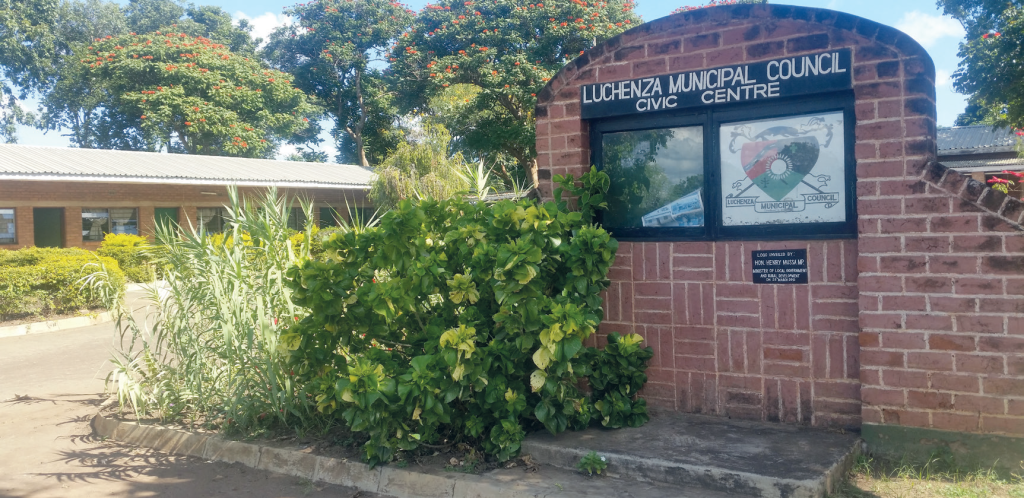
Malawi has 35 local government councils comprising four cities of Blantyre, Lilongwe, Zomba and Mzuzu, two municipalities; namely, Luchenza in Thyolo and Kasungu, one town council in Mangochi and 28 district councils.